
Categories
Every category asks something different of you
The listings are sorted the way a shop is sorted, and that arrangement hides something useful: the categories differ enormously in how much a wrong guess costs. Shoes punish a sizing mistake twice, once on the return that is not worth doing and once on the freight you already paid. A watch that turns out disappointing costs you the item and almost nothing in freight.
The markers on this page are ours. No agent publishes a risk rating, and the number under each icon is our editorial read for people ordering from China for the first time.
Footwear
The heaviest and least forgiving group. Chinese sizing runs small and is quoted in centimetres more often than in your local numbering, so measure your foot rather than converting a label.
Sneakers
Highest volume, and the one where community sizing advice is worth reading before you order.
Open this categoryCategoryCasual shoes
Same sizing problem, usually lighter and cheaper to move.
Open this categoryCategoryLeather shoes
Stiff materials make a small sizing error much less wearable.
Open this categoryCategorySlippers
Forgiving fit, bulky for the price. Good filler for a box that is already going.
Open this categoryClothing is about measurements, not letters
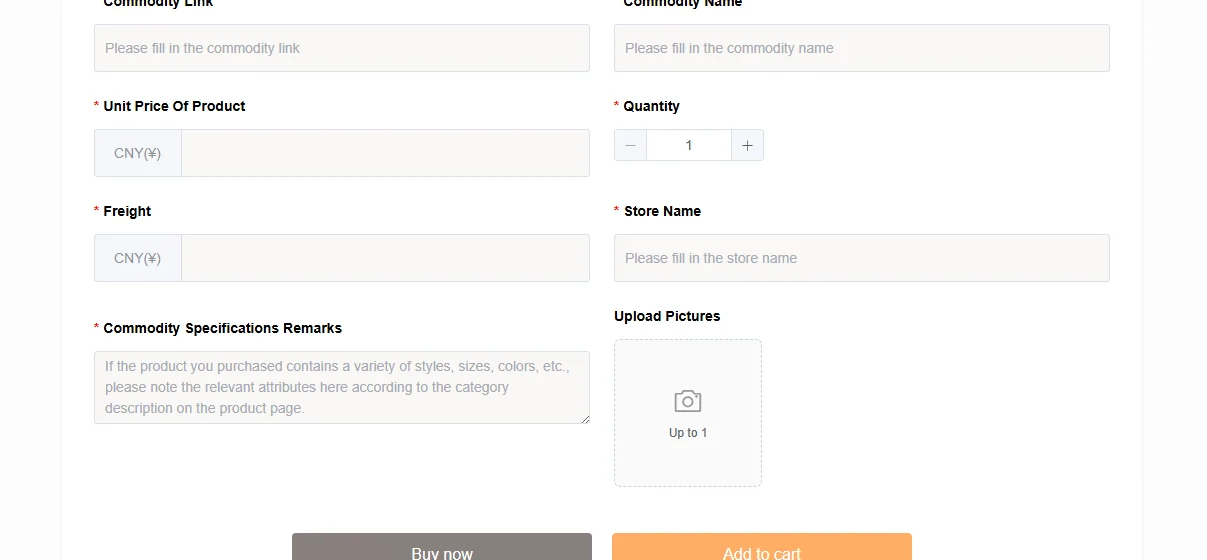
A label that says large tells you almost nothing across markets. What tells you something is the measurement chart on the listing, which most sellers publish in centimetres: chest, shoulder, length, sleeve. Measure a garment you already own and compare numbers to numbers.
Weight is the other half of the decision. A padded jacket is light for its volume and expensive to ship anyway, because most routes charge on whichever is larger of actual and volumetric weight.
Clothing
Cheap to try, cheap to be wrong about, and the group where consolidation pays off fastest because several light items share one box.
T-shirts
The cheapest way to test a seller before you trust it with something expensive.
Open this categoryCategoryHoodies
Forgiving fit, moderate bulk. A common first order.
Open this categoryCategoryJackets
Bulk drives the freight more than the price does.
Open this categoryCategoryDown jackets
The volumetric weight problem in its purest form.
Open this categoryCategoryJeans
Waist and inseam in centimetres, not your usual size.
Open this categoryCategoryTrousers
Same measurement rules as jeans, usually lighter.
Open this categoryCategoryShirts
Collar and shoulder are the measurements that decide it.
Open this categoryCategoryKnitwear
Fibre content is worth reading. Photos will not tell you.
Open this categoryBags and accessories have no fit problem
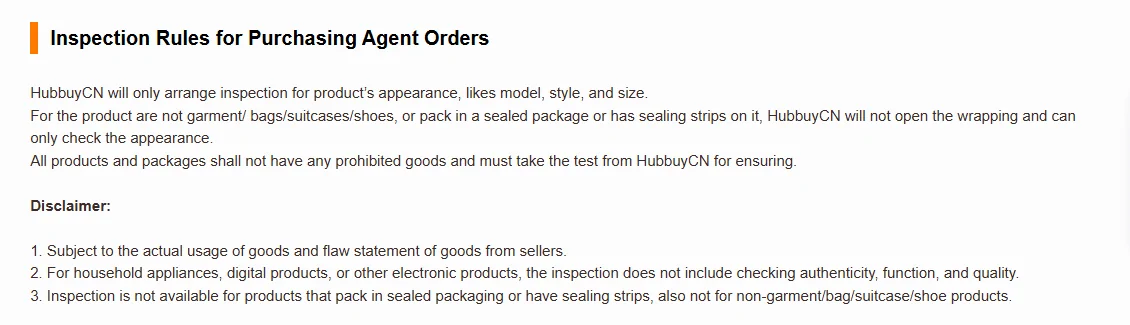
Which is why they are the easiest first order. Nothing has to fit, so the only question is whether the item is what the picture showed. That is exactly what the free inspection photographs are good at: hardware, stitching, lining and shape.
Small accessories are also the category where freight stops mattering. A watch, a wallet or a pair of sunglasses adds so little weight that the second payment barely moves, which makes them the natural filler for a box you are already sending.
Bags, watches and small goods
Light, unfussy about fit, and the group where the inspection photos tell you the most.
Bags
Check hardware and lining in the photos. Fit is not a factor.
Open this categoryCategoryBackpacks
Bulky but light. Straps and zips are what fail first.
Open this categoryCategoryShoulder bags
Strap hardware is worth a close look in the photos.
Open this categoryCategoryWallets
Almost weightless. Good filler for a parcel already going.
Open this categoryCategoryWatches
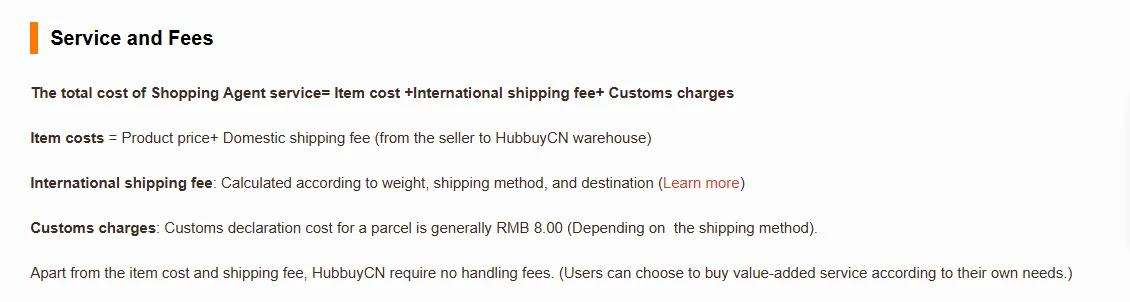
Read the movement description carefully. The check does not test function.
Open this categoryCategoryJewellery
Plating quality is invisible in photographs of any kind.
Open this categoryCategoryEyewear
Fragile, so ask for reinforced packing when you submit the waybill.
Open this categoryCategoryBelts
Measure the belt you own. Sizing conventions vary wildly.
Open this categoryThe awkward ones
Categories that fight with the shipping route
Some things are not hard to buy, they are hard to move. The official customs page is the one to read here, and the restriction is set by the route rather than by the agent.
| Category | What gets in the way |
|---|---|
| Perfume and aerosols | Liquids and pressurised goods are refused by many air routes. Check the restriction field before you order. |
| Electronics with batteries | Battery rules vary by route and by country, and the inspection explicitly does not test function. |
| Home and kitchen | Volume rather than weight is what you pay for, and breakables need the reinforced packing option. |
| A large packed parcel | Confirm the current route’s weight and size limits for the actual contents. Weight alone does not establish customs treatment; check the destination requirements. |
Restrictions are set by the courier and by your country, not by the agent. Ask support which routes accept your category before you order, because the answer changes by destination.
Electronics, home and the rest
Worth buying, worth reading the restrictions first.
Electronics
Plug type, voltage and battery rules. Function is not inspected.
Open this categoryCategoryHeadphones
Small and light, but still battery goods.
Open this categoryCategoryHome and lifestyle
You pay for volume here more than for weight.
Open this categoryCategoryToys and figures
Boxes are part of the value, so ask for reinforced packing.
Open this categoryHow to vet a seller when the listing is all you get
Nothing in this process vets a shop on your behalf. The agent buys wherever it is pointed, and the appearance check happens weeks after the money moved. So the shop is decided by you, from a page the shop wrote about itself.
Treat a sales count as a tally of button presses, since that is all it records. Shop age and platform standing carry more because they cannot be manufactured over a weekend. Better than either is the question thread under a listing: it is the only region of that page authored by somebody with no stake in the sale.
What genuinely changes your position is whether the platform holds a deposit against that shop. Where one exists, a dispute has somewhere to go and someone to go to. Where none does, the listing can vanish overnight and take the route with it, which is the case nobody downstream can repair.
How to judge an item against a check this narrow
Shop settled, limits known. What remains is narrower: does this particular object come out the far end still recognisable as what you wanted. Four questions answer it, and all four can be answered before any money moves.
Fine to buy unseen
- Soft goods sized from a measurement you already took
- Bags, wallets and belts, where hardware and stitching are precisely what a photograph resolves
- Anything cheap enough that guessing wrong costs less than return freight
- Shops with platform standing, so a dispute has an address
Think harder first
- Anything requiring power, since nothing gets switched on
- Anything sealed, since the seal stays intact and the check stops at the wrapping
- Liquids and pressurised containers, the goods carriers decline most often
- Made to order work, where a chat log is the only surviving record of the specification
